GEO vs SEO: The Differences and How to Make the Shift
 Written by Villion7 min read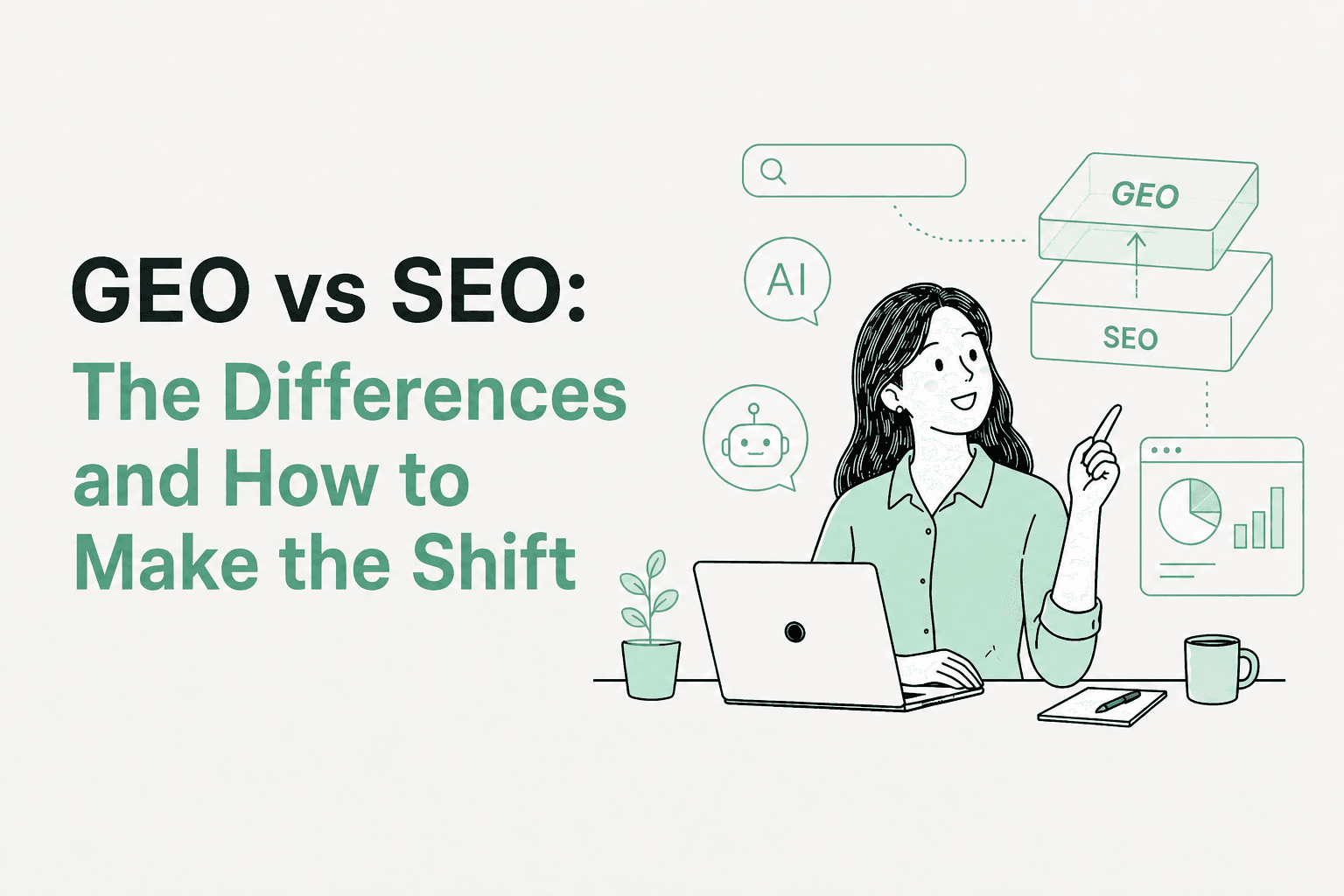
Key takeaways
SEO targets search rank; GEO targets being cited inside AI answers.
GEO's core is structured data + AI-friendly content + trust signals.
SEO and GEO are complements, not substitutes.
A five-step process makes the transition systematic.
SEO vs GEO: detailed comparison
Dimension | SEO | GEO |
|---|---|---|
Goal | Rank on page one of search results | Get cited inside AI answers |
Target platforms | Google, Naver, Bing | ChatGPT, Perplexity, Google AI Overview, Claude |
Core strategy | Keyword optimization + link building | Structured data + content structure + trust signals |
Content shape | Long-form blogs and pages | Tables, lists and FAQs — AI-friendly structures |
Technical elements | Meta tags, sitemaps, page speed | JSON-LD, Schema markup, llms.txt |
Measurement | Rank, CTR, organic traffic | Citation rate, share of voice, AI-sourced traffic |
Competitive analysis | Keyword rank comparison | Brand share within AI answers |
Automation level | Partial (SEO tools) | End-to-end automation across diagnosis, structuring and monitoring (Villion and similar; deploy stays manual after review) |
Time to impact | Gradual (3–6 months) | AI indexing typically reflects within 2–4 weeks after deployment |
Outlook | Click volume declines as SERPs shrink | Grows in importance alongside AI search adoption |
Five steps from SEO to GEO
01. Diagnose the current state
Audit whether your site has structured data, how content is organized and how AI search engines currently surface it. A GEO diagnostic tool gives you a fast read on where you stand.
02. Add structured data
Ship JSON-LD (Organization, Product, FAQ and others) to your site. This is the technical foundation that lets AI search engines parse your information accurately.
03. Restructure your content
Convert long-form, text-heavy pages into tables, lists and FAQs that AI can read cleanly. Clear question-and-answer formats work best.
04. Cooperate with AI crawlers
Allow AI crawlers (GPTBot, PerplexityBot and others) in robots.txt, and add an llms.txt so AI agents can understand your site better.
05. Monitor and improve
Track citation rate and share of voice continuously, then iterate on content and structure based on what the data shows.
Frequently asked questions
Does GEO replace SEO?
No. GEO complements SEO rather than replacing it. SEO optimizes rankings on classic search engines (Google, Naver), while GEO optimizes how AI search engines (ChatGPT, Perplexity) cite you. The most effective approach is to run SEO and GEO together.
If we already do SEO well, does GEO come for free?
Only partly. High-quality content and technical work for SEO help GEO too, but the structured data (JSON-LD), AI-friendly content structure (tables, FAQs) and trust signals that AI search engines look for need their own dedicated optimization.
Is shifting to GEO expensive?
Done manually, it takes developers, content specialists and technical writers. An integrated solution like Villion bundles diagnosis, structured-data generation and AI answer monitoring into one workflow, sharply reducing cost and time versus doing it piece by piece.
What matters most in GEO?
Structured data (JSON-LD) is the foundation. AI search engines rely on it to understand and cite a page accurately. Layer AI-friendly content structure and trust signals on top, and citation rates rise from there.
How does your brand show up in AI answers?
Get a brand audit- 전략